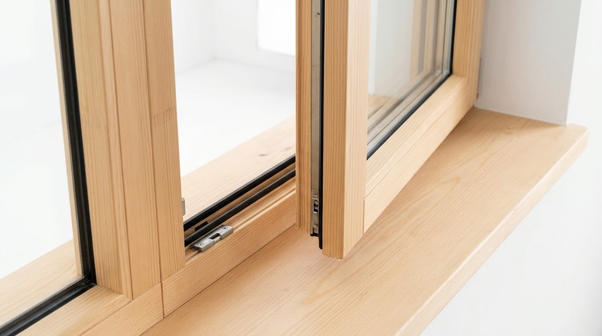
Composite windows commonly combine an aluminium exterior with timber on the inside. How long do composite windows last on commercial projects? There is no single lifespan that applies to every system: durability depends on the product, exposure, use, maintenance and installation quality. Accurate composite window installation helps protect seals, support frames and keep opening hardware working as intended throughout the service life of the windows.
Precise Measuring And Frame Fixing Prevent Structural Strain
Supporting long-term durability begins before a panel reaches the site aperture. Accurate opening surveys help identify dimensional discrepancies that could otherwise affect frame alignment or installation.
When checking site openings, installers focus on several critical structural factors:
- Substrates are checked at relevant points against the tolerances set out in the approved installation information.
- Perimeter gaps must follow the approved system details and allow for the movement specified by the designer or manufacturer.
- Anchor locations and installation methods must follow the approved fixing design and manufacturer requirements to help maintain frame alignment.
Correct fixing methods help keep composite frames square and supported within the structural opening. Over-tightening fixings can distort the frame, causing sashes to bind and increasing hardware wear.
Precise Packing Maintains Frame Alignment And Reduces Stress
Incorrect support-packer placement can increase the risk of distortion or premature wear, even in a well-manufactured system. Packers support and transfer loads as required by the approved window-system and installation details.
Incorrect packer placement can contribute to frame movement, misalignment and additional stress on joints or hardware. Installation teams position packers in accordance with the approved system and manufacturer instructions, taking account of specified load paths and operating components. Careful alignment helps reduce the risk of racking and damage to finishes or seals.
Perimeter Sealing Helps Control Moisture Ingress And Reduce Thermal Bridging
The interface between the composite frame and the structural opening is a primary point of vulnerability. Ineffective perimeter sealing lets moisture and cold air penetrate the building envelope, degrading internal components over time.
A robust perimeter-joint strategy normally combines weather protection, insulation and internal airtightness or vapour control, in line with the approved system detail:
- External weather-resistant seals help limit wind-driven rain entering perimeter joints when installed to the approved detail.
- Specified insulation helps reduce thermal bridging at the perimeter interface.
- An internal airtightness or vapour-control layer limits warm, moist indoor air entering the perimeter joint where required by the approved detail.
If moisture reaches vulnerable timber or concealed components, it can cause swelling, deterioration or corrosion over time. Correct perimeter sealing and continuity with the surrounding envelope help protect the frame and maintain thermal performance.
Maintaining Clear Drainage Paths For Accumulated Water
Many commercial window systems include drainage paths to manage water that enters the outer frame zones. These routes direct water towards designed drainage outlets so it can discharge safely.
During composite window installation, installers must keep designed drainage paths clear. Excess sealant, foam or misplaced packers can obstruct outlets or channels. If drainage is blocked, water may remain within the frame for longer than intended and increase the risk of seal, finish or fixing deterioration.
Fine-Tuning Hardware Adjustments To Prevent Mechanical Wear
Smooth mechanical operation is essential for long-term durability. Heavy commercial sashes exert continuous pressure on hinges, multipoint locks and corner gearing.
Where the window system includes adjustable hardware, commissioning should confirm smooth operation and correct engagement:
- Hinge pivots are adjusted to equalise sash gaps around the complete frame perimeter.
- Locking cams are aligned to engage smoothly without forcing the operator handle.
- Friction stays are set to hold sashes securely without binding during movement.
Correct mechanical adjustment can reduce unnecessary wear on ironmongery and support consistent gasket contact, helping limit draughts and water ingress.
Protecting Installed Units From Follow-On Trade Damage
Installing a high-performance window correctly is only half the battle on busy commercial sites. Newly fitted units remain vulnerable to damage from plasterers, bricklayers and external cladding teams until practical completion.
Mortar splashes, paint overspray and grinding sparks can damage powder-coated aluminium surfaces or scratch glass coatings. Protective tapes, frame wraps and clear site protocols help reduce this risk. Protecting composite windows from follow-on trade damage helps preserve the finish and avoid unnecessary repairs before handover.
Final Commissioning And Quality Checks Confirm Performance
Before handover, installation and commissioning checks can identify visible defects and operational issues within the installation team’s scope. Functional checks under site conditions may reveal alignment issues that can be addressed before completion.
Depending on the window system and project requirements, commissioning checks can include:
- Operational cycles to verify smooth opening, closing and locking actions.
- Perimeter seal and gasket checks to confirm consistent contact and finish.
- Drainage checks to confirm designed outlets and channels remain clear.
- Surface checks verify that protective coatings and timber finishes remain undamaged.
Documenting these checks provides a clear QA record of the installation and commissioning process.
Quality Assurance Documentation Safeguards Performance And Warranties
Closing out the glazing package requires structured quality assurance. Installation records can document the checks completed against the approved project details and relevant manufacturer instructions.
Maintaining clear QA records can help demonstrate compliance with applicable installation procedures and provide evidence relevant to warranty queries, subject to each manufacturer’s and contract’s terms. Such records can also support handover discussions and future maintenance.
What Affects Composite Windows Lifespan?
The longevity of high-performance composite frames is influenced by both product design and site execution. From initial measurements to final commissioning, each fitting stage can affect durability. Precise fixing, clear drainage, correct hardware adjustment and documented QA all help a composite window installation perform as intended over the long term.
Speak to a commercial glazing specialist about composite window installation and how APW helps protect quality, programme delivery and handover standards on commercial projects.